Healing spaces
Healing Sunrooms for Tea, Yoga, Spa, Plants, and Winter Light
A healing sunroom works when the room supports a daily ritual. Start with what the space should help you feel, then plan light, shade, air movement, privacy, drainage, and structure around that use.
Application first
Tea, meditation, yoga, spa, plants, and winter gardens each need different comfort planning.
Real benefits
More daylight, calmer transitions, usable garden views, cleaner airflow, and a room people use daily.
Designed comfort
Glass, shade, roof vents, privacy, drainage, and maintenance access are planned as one system.
What the page is really about
A healing glass room is not a theme. It is a comfort system for a specific ritual.
Many sunrooms look calm in a photo but become too hot, too bright, too exposed, or too hard to maintain. Sunguard Room designs healing spaces by pairing emotional goals with practical decisions: how the room faces the sun, how shade is layered, where air can escape, where water goes, and how furniture leaves the ritual easy to repeat.
Applications and benefits
Choose the healing scenario before choosing the roof shape.
The same aluminum and glass system can become very different rooms. The best design starts by naming the ritual, then matching the room to the body, the view, and the climate.
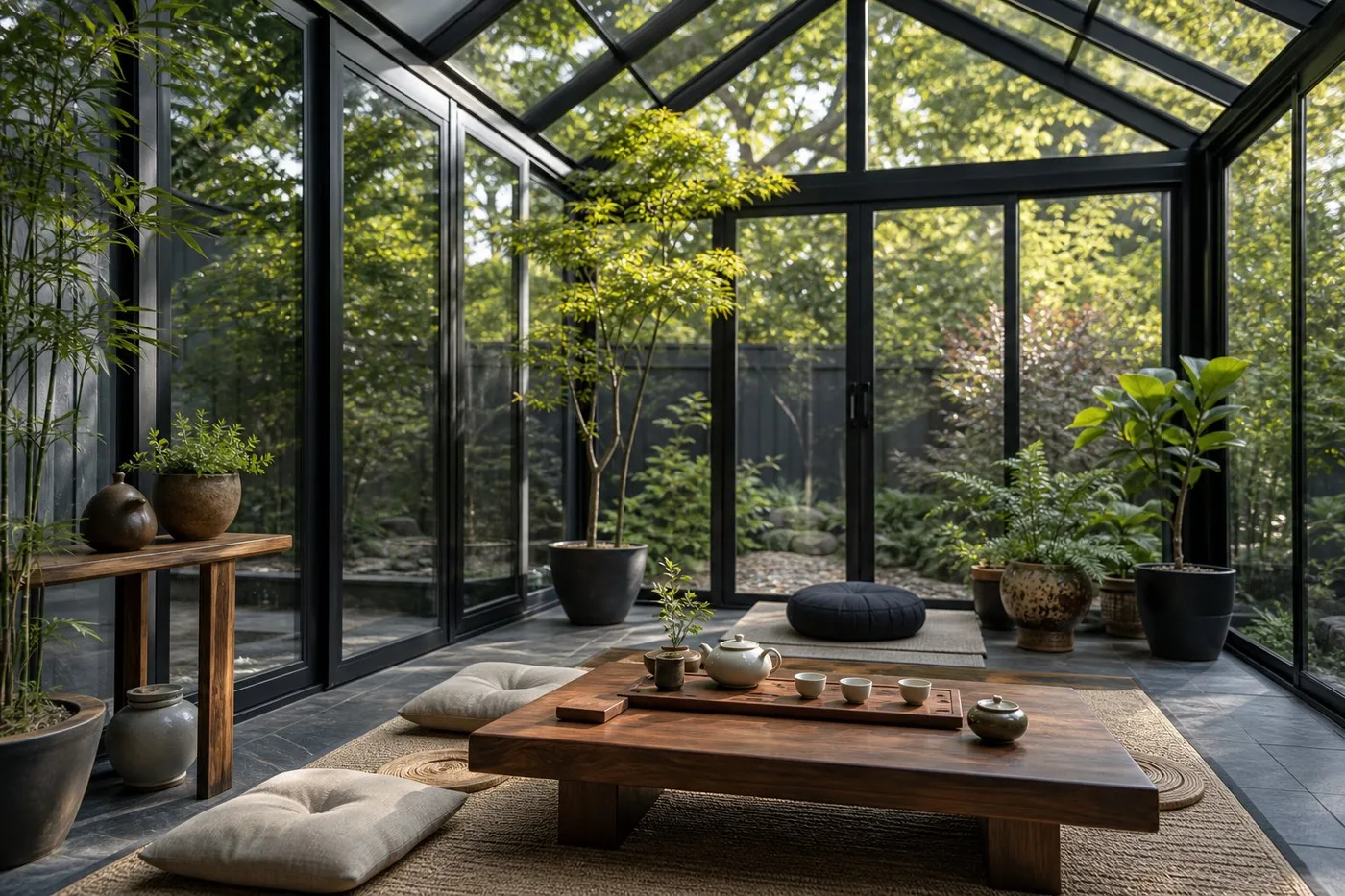
01 / Tea room and meditation
Filtered light, low noise, and a seated layout make stillness easier to keep.
A tea room sunroom works best when the table, cushions, storage, and garden view are placed before the glass details are finalized. The benefit is a daily place to slow down without leaving home.
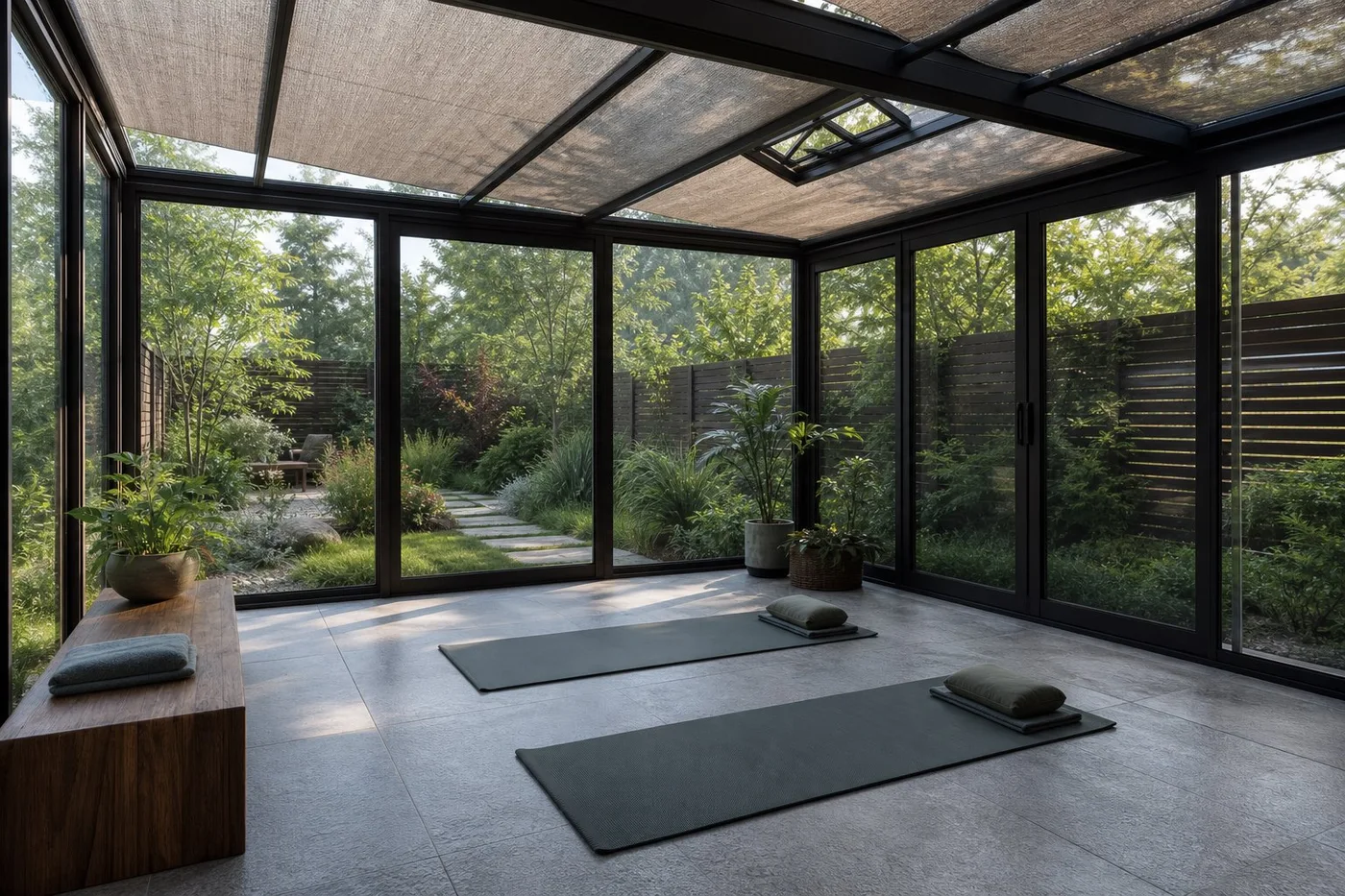
02 / Yoga and breathwork
Open floor space, roof ventilation, and shade keep movement comfortable.
Yoga sunrooms need more than a pretty view. They need enough uninterrupted floor area, stable temperatures during long sessions, and privacy that lets the body relax instead of feeling watched.
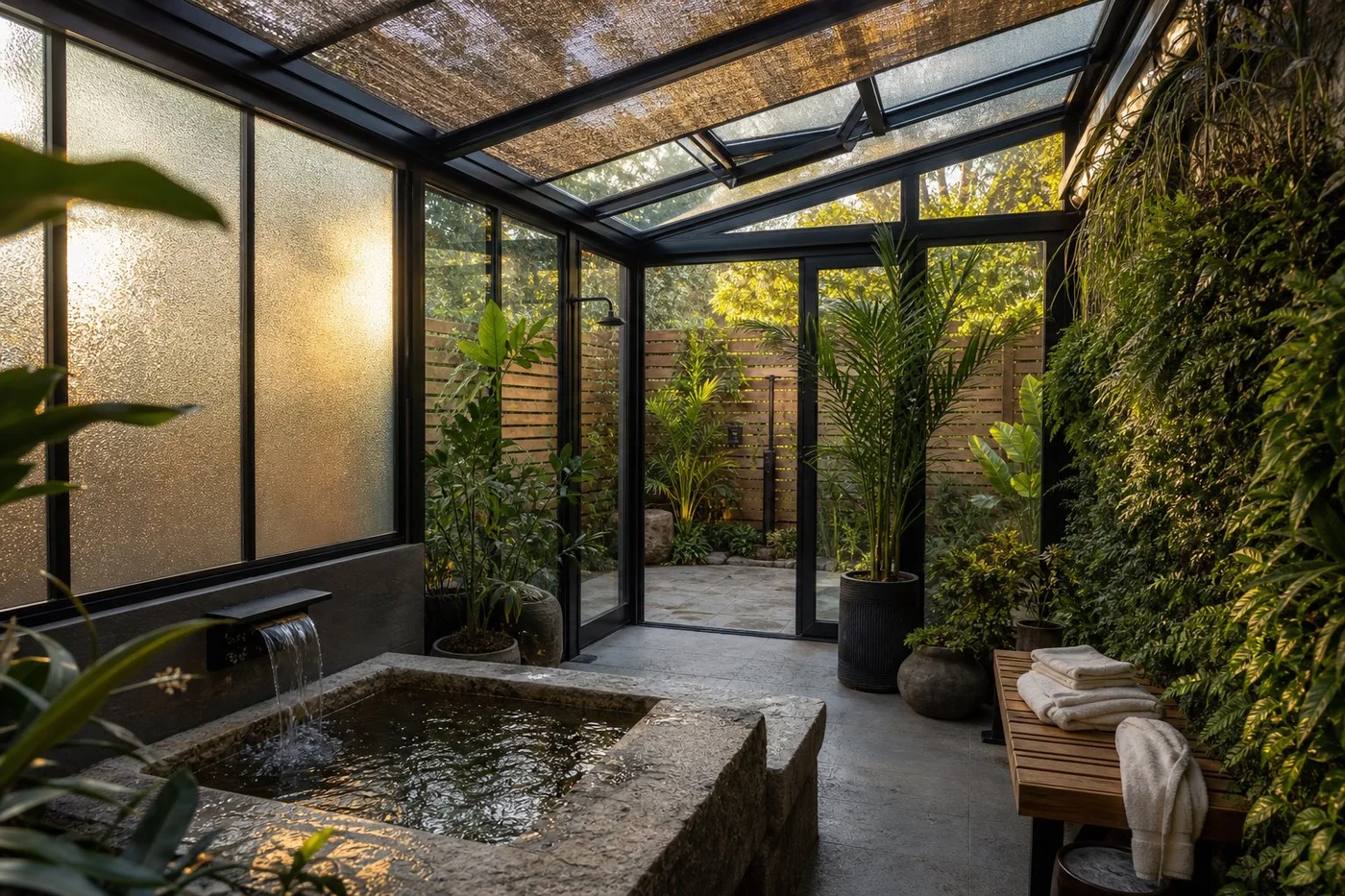
03 / Spa and water rituals
Water, privacy, and airflow turn the room from decorative to usable.
A spa sunroom should feel sheltered before it feels luxurious. Moisture, floor slope, drainage, privacy glass, ventilation, and maintenance access decide whether the space stays comfortable after installation.
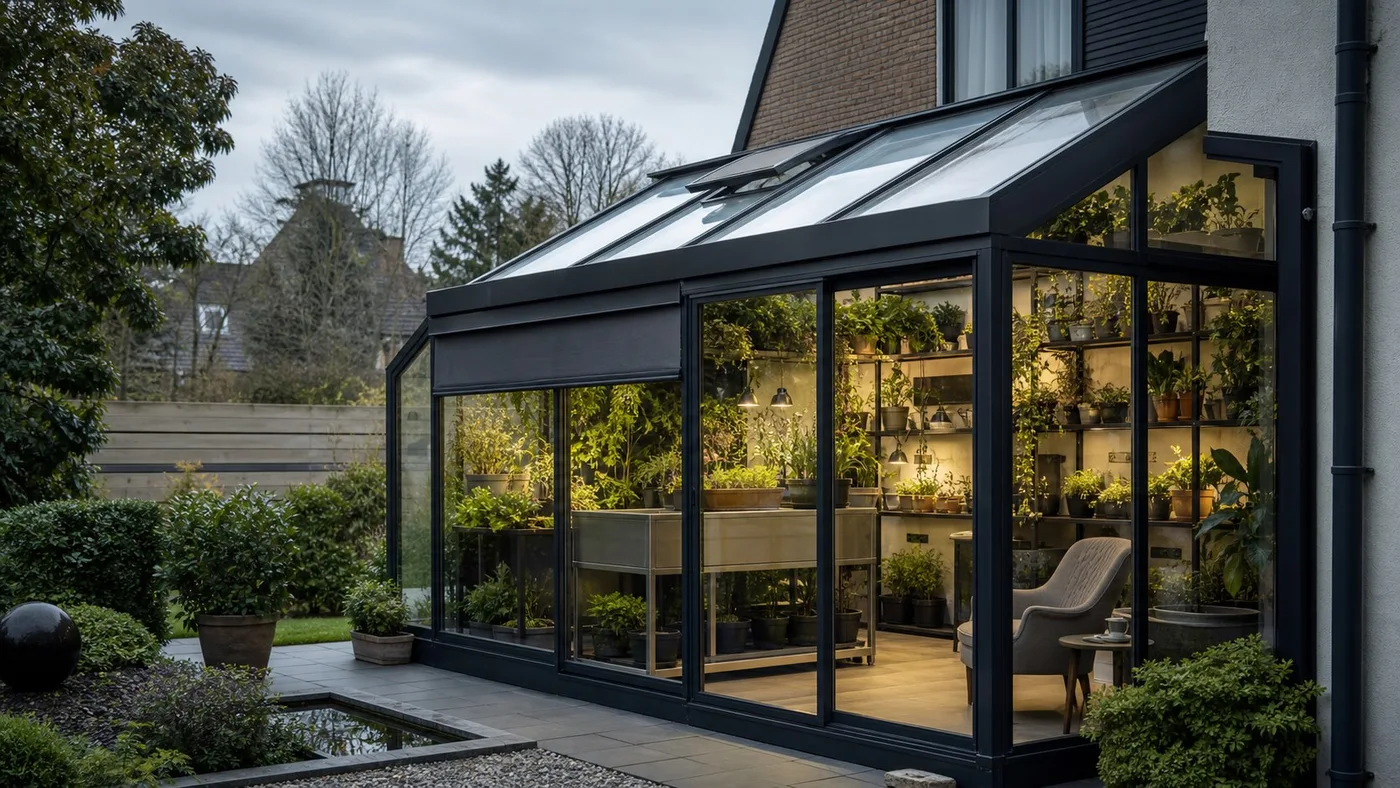
04 / Indoor garden and plant therapy
Plants need light, but people need shade, air, and maintenance access.
An indoor garden sunroom can support plant care, reading, and quiet movement when plant zones and sitting zones do not compete. The benefit is year-round green therapy without turning the room into a greenhouse that overheats.
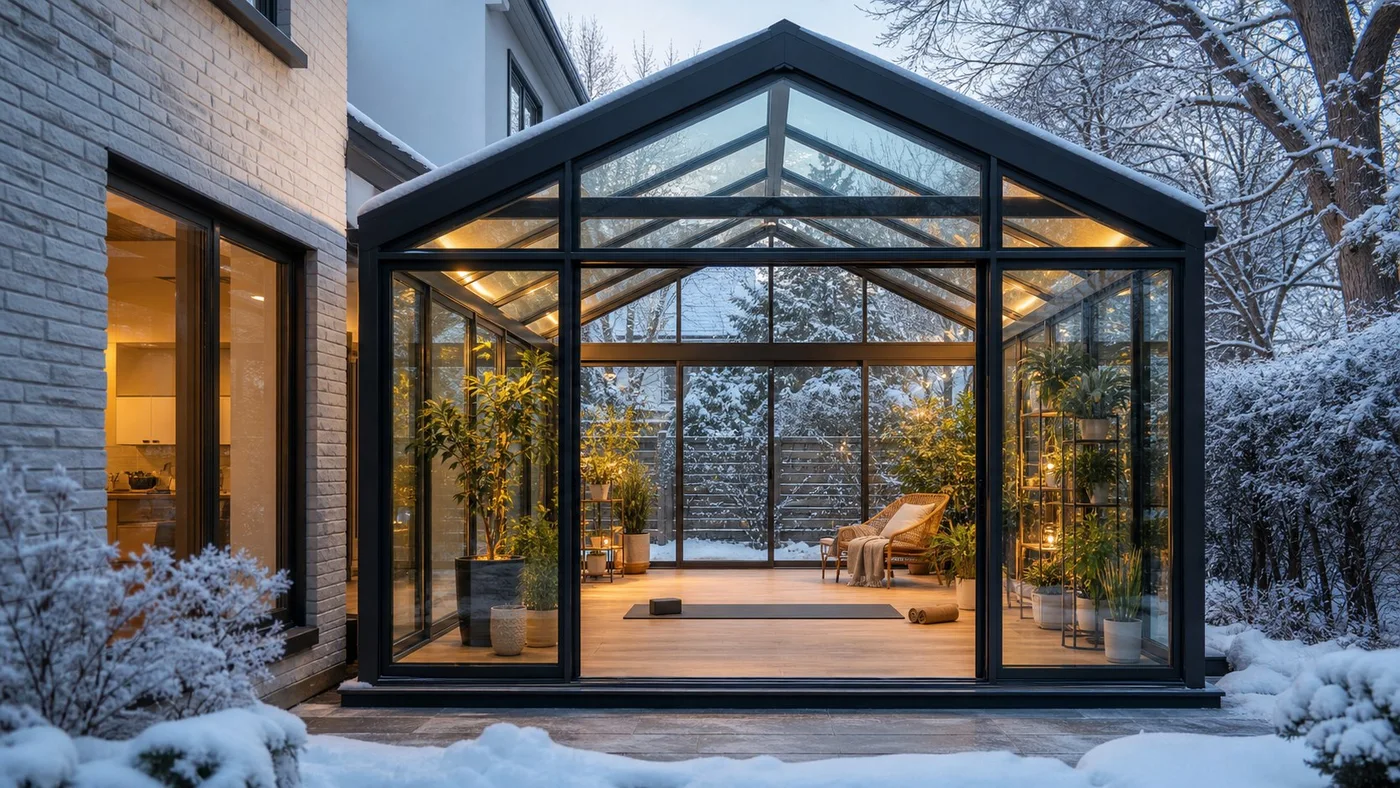
05 / Winter garden
Protected daylight helps a cold-season room feel alive without losing comfort.
A winter garden is about emotional warmth as much as glass. Insulated glazing, roof form, thermal breaks, shading for bright days, and a practical plant layout can make the room useful when the outdoor garden is asleep.
Comfort decisions
The benefits come from details you can feel every day.
A healing sunroom is successful when it stays inviting after the first photo. These decisions affect daily comfort more than decoration.
Light
Filtered daylight without harsh glare
Exterior shade, glass choice, and roof orientation help the room stay bright without becoming visually tiring.
Air
Ventilation that releases heat and moisture
Roof vents, operable panels, and airflow paths keep yoga, plants, and spa use from feeling trapped.
Privacy
Views out without exposure from outside
Privacy glass, screens, planting, and frame layout protect the rituals that need quiet boundaries.
Water
Drainage planned before the mood board
Spa, plant, and poolside rooms need floor slope, waterproof edges, and cleaning access designed early.
Layout
Enough open space for the real activity
Tea tables, mats, benches, planters, and circulation need fixed zones so the room remains easy to use.
Care
Maintenance that does not break the calm
Roof cleaning, plant watering, shade servicing, and glass access are part of the comfort strategy.
Design from your ritual
Send site photos and tell us what you want the room to help you do every day.
Sam can review the existing wall, roof line, garden view, climate, and healing goal before suggesting a sunroom direction.

Design-led custom healing sunrooms, glass rooms, conservatories, and winter gardens for overseas homes.
Healing spaces
Application-led sunroom ideas for tea, meditation, yoga, spa, plants, and winter light.
Image policy
Key visuals are AI-enhanced concepts; founder and technical-detail references remain grounded in project materials.